Blog · 29 Oct 2026 · 5 min read
Is virtual staging legal, and is it worth it? A realtor's guide
"Is virtual staging legal?" and "is virtual staging worth it?" are two of the most common questions agents search about listing photos. The short answers are: yes, it's legal in the US, UK, Canada and Australia when it's honest, and it's worth it for some listings but not all. Here's the longer version.
What virtual staging is
Virtual staging adds furniture and decor digitally to a photo of an empty (or emptied) room. It shows buyers how a space could be used, without the cost and logistics of hiring and moving real furniture.
Is it legal?
Virtual staging itself isn't illegal. The legal risk comes from misleading buyers. The general principle across the US, UK, Canada and Australia is that advertising, including listing photos, must not give a false impression of the property. In practice that means:
- Disclose it. Label staged images clearly, for example "Virtually staged" on the photo or in the caption. Many MLSs require this, and some require the unstaged original to be shown as well.
- Only add furniture and decor. Don't change walls, floors, windows, views, fixtures or room sizes.
- Don't hide defects. Placing a virtual rug over a damaged floor or a sofa in front of a damp wall is misleading.
- Keep scale realistic. Undersized furniture makes rooms look bigger than they are.
Rules are tightening around AI-edited images. Several jurisdictions, including California from 2026, now have specific disclosure requirements for digitally altered listing photos. Our guide to AI listing photo disclosure covers the details. Always check your own MLS and local rules.
When virtual staging is worth it
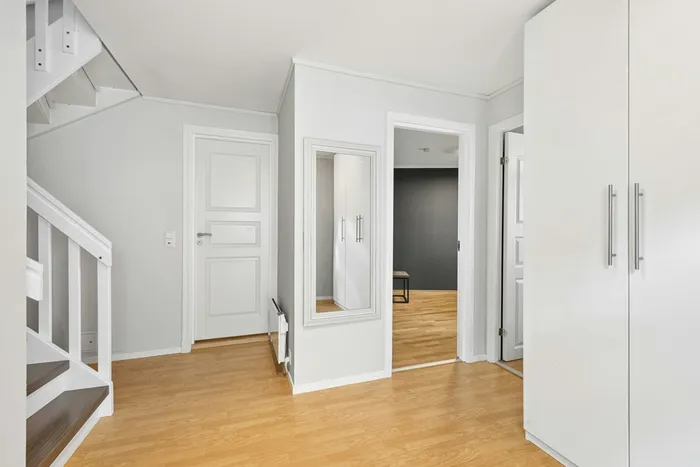
Before
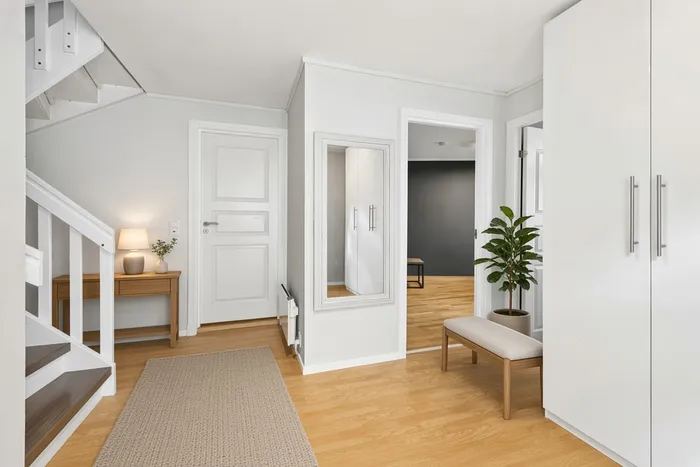
After: our virtual staging edit
This demo stages an empty hallway with movable furniture only: a console table, lamp, rug, bench and plant. The walls, doors, stairs, mirror and floor are unchanged. On a real listing it would be labelled "Virtually staged".
- Empty homes and new builds. Empty rooms are hard to judge from photos, and staging helps buyers see scale and use.
- Awkward or multi-purpose rooms. A small box room shown as a home office or a nursery.
- Rentals and investment listings, where real staging is rarely worth the cost.
- Homes where the seller's furniture is dated and they'll be moving out: photograph empty, then stage.
When it's not worth it
- Well-furnished homes. Good decluttering usually does more. See how to declutter listing photos.
- Luxury homes where buyers expect to walk into a staged home. Real staging may serve the viewing better, and the photos should match what buyers see.
- Very cheap, obviously fake staging. Furniture that floats, casts no shadows, or doesn't match the room's light can do more harm than an empty room.
AI staging vs human-edited staging
AI staging apps are fast and cheap, and can be good enough for simple, well-lit rooms. Common problems include warped furniture, impossible perspectives, changed windows or walls (which crosses the honesty line), and inconsistent styles between rooms. Human-edited or human-checked staging costs more but handles perspective, lighting, shadows and consistency better. For a lead photo, the difference shows.
How to present staged photos to buyers
- Label every staged photo clearly.
- Include the empty version of key rooms too, so buyers know what they'll see at a viewing.
- Use a consistent style across the listing, matched to the likely buyer.
- Mention in the description that some photos are virtually staged.
Being upfront avoids disappointment at viewings, and buyers generally accept staging as a visual aid when it's labelled.
Questions to ask a staging provider
- Will you only add furniture and decor, without changing the room itself?
- Will you add the "Virtually staged" label, or supply a version with it?
- How many revisions are included if a piece of furniture looks wrong?
- What resolution will the images be, and how long will they take?
A simple way to decide, room by room
Instead of asking "should I stage this listing?", ask it room by room:
- Is the room empty? If so, staging the main living area and the main bedroom usually helps most. Bathrooms, hallways and utility rooms rarely need it.
- Is the room's purpose unclear? A small second bedroom or an awkward loft can be staged as an office or a guest room so buyers see a use.
- Is the room furnished but cluttered? Declutter instead of staging.
- Is the room furnished and tidy? Leave it alone, and just do a good standard edit.
Most listings that benefit from staging need it in two to four rooms, not every room.
How to shoot a room for virtual staging
- Shoot from a corner at chest height, capturing two walls and as much floor as possible. Stagers need visible floor to place furniture convincingly.
- Keep the camera level so vertical lines stay straight.
- Switch on the lights and open the blinds, so the stager can match the light direction for shadows.
- Take a second angle of the main rooms, in case one works better for the layout.
- Clear the floor of anything that will be gone before viewings, such as boxes or tools.
Choosing a style
Stage for the likely buyer, not for your own taste. A city flat aimed at young professionals suits simple, modern furniture. A family home suits a warmer, practical look with a dining table that seats the family. Keep the style consistent across all staged rooms in the listing, and avoid oversized statement pieces that make rooms look smaller.
Accuracy checklist before publishing
- Furniture is realistically sized for the room.
- Walls, windows, floors, fittings and views are unchanged.
- No defects are covered.
- Every staged image is labelled.
- The empty version of key rooms is available for buyers.
How we can help
Our listing photo editing covers the edits most listings need: sky replacement, virtual twilight and decluttering, from US$29 for your first listing, within 24 hours, paid after delivery. If you're unsure whether a listing needs staging or just a clean edit, send us a photo and we'll give you an honest opinion. We can also turn listing photos into short AI videos and social posts.
Frequently asked questions
Is virtual staging legal?
Yes, in the US, UK, Canada and Australia, as long as it doesn't mislead buyers. Label staged photos, only add furniture and decor, keep scale realistic, and never use staging to hide defects. Some MLSs and jurisdictions have specific disclosure rules.
Is virtual staging worth it?
Usually for empty homes, new builds, rentals and rooms with an unclear purpose. Less so for well-furnished homes, where decluttering does more, or for luxury homes where photos should match a real staged viewing.
Is AI virtual staging good enough?
For simple, well-lit rooms it can be. Check for warped furniture, wrong perspective and any changes to walls, windows or floors, which would cross the honesty line.
Should I show the empty room as well?
For key rooms, yes. It helps buyers know what they'll see at a viewing and avoids disappointment.
Related
- Real estate listing photo editing
- Day to dusk photo editing: free tools, DIY and paid services compared
- How to declutter real estate photos: before the shoot and in editing
- How to outsource real estate photo editing (and choose the right editor)
- Real estate photo editing in Australia and the UK: what agents should know
- Real estate photo editing prices: what you should pay per photo or per listing
- Real estate photo editing software vs an editing service: which is right for you?
- Sky replacement in real estate photos: how to do it honestly and well
- Virtual twilight for real estate: when day-to-dusk photos help a listing
- AI listing photos: what realtors must disclose
This article is general information, not legal advice. Rules change; check the linked official sources.