Blog · 28 Nov 2026 · 14 min read
Quebec listing photos: OACIQ AI label, French text and sold banners (2026)
In most of Canada, the listing photo rules a realtor follows come mainly from the local board's MLS® rules and the provincial regulator (see our REALTOR.ca and CREA listing photo guide). Quebec is different on three counts. The regulator, the OACIQ (Organisme d'autoréglementation du courtage immobilier du Québec), now spells out what an ad must say when an image was made or changed with artificial intelligence. Quebec's brokerage regulation sets what has to appear on any ad, including the graphics you post on social media. And the Charter of the French language applies to commercial advertising. This guide is for real estate brokers and agencies in Quebec, and for the photographers and editors they brief. It sets out what the OACIQ guideline, the brokerage regulation, the Charter and the Office québécois de la langue française (OQLF) say, and turns it into a checklist for photos, overlays and "sold" graphics.
We're the Light & Polish team. We edit listing photos for realtors, including in Canada; we don't shoot properties or act as brokers. We are not lawyers. Rules and guidelines change, so check the linked pages, and ask the OACIQ, your agency's executive officer or a lawyer before you rely on anything here.
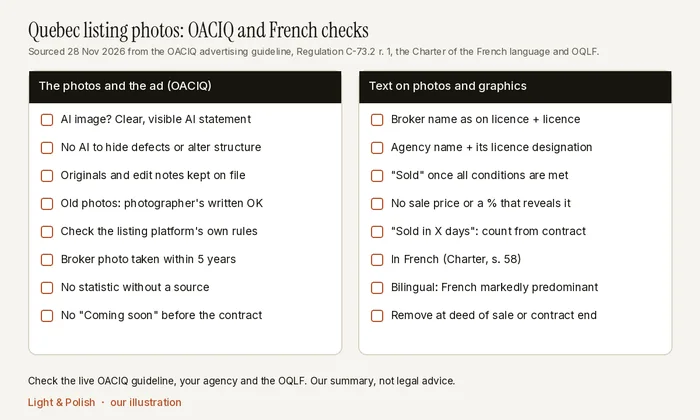
Who sets the rules for listing photos in Quebec
- The brokerage regulation. The Regulation respecting brokerage requirements, professional conduct of brokers and advertising (chapter C-73.2, r. 1) is the law. Section 112 bars advertising that is "false, misleading or incomplete or that leaves out a material fact", and sections 113 to 118 set what an ad and a description sheet must and must not contain.
- The OACIQ guideline. The OACIQ's guideline on representation, solicitation, promotion and advertising explains how the regulator applies those sections. Its advertising section was last updated on 17 June 2026, and the OACIQ's table of changes lists a new, separate section on artificial intelligence in advertising among the changes to that section.
- The Charter of the French language. Section 58 of the Charter covers public signs and commercial advertising, and section 52 covers brochures, catalogues and similar documents "regardless of the medium used". The OQLF applies it.
- The federal Copyright Act. It decides who may reuse a photo. The OACIQ points brokers to it on its marketing photos page.
Centris and other listing platforms can set rules of their own. The OACIQ lists "Check the regulations of property listing platforms" among a broker's duties, so check yours before uploading.
AI-edited photos: the statement the OACIQ asks for
Section 6.3.1 of the guideline says: "When an image is generated by artificial intelligence and used in an advertisement, real estate brokers must inform the public to avoid any confusion regarding the reality represented." Its minimum requirement is that "Advertisements must include a clear and visible statement, such as: 'Image generated by artificial intelligence.'" The French version of the guideline gives the wording as « Image générée par l'intelligence artificielle » (OACIQ, Publicité).
The OACIQ says the statement applies, for example, when AI is used to:
- change the appearance of a property without touching the structure or making substantial changes, such as "adding furniture, artificially creating a seasonal atmosphere, or adjusting the lighting";
- carry out virtual staging or visual transformations;
- generate images that could alter the original version;
- illustrate a project to be built or an off-plan sale.
Two things follow for anyone editing photos. First, the list goes further than virtual staging: a lighting adjustment or a summer lawn on a winter photo, made with AI, is on it. Our own edits are AI-assisted, so our reading is that a Quebec listing using them should carry the statement. Second, the guideline does not say whether a manual edit made without AI (a plain exposure or white-balance correction, for instance) needs it. We haven't found an OACIQ answer to that; if it matters for a listing, ask the OACIQ.
The guideline also draws a hard line: "Images that fundamentally alter the actual appearance of a property violate the regulations and laws in force." Among the broker's key points: "Never use AI to hide defects, alter the structure, or misrepresent a property." A label does not fix an edit that does those things.
One source reads more strictly. The OACIQ's separate Guide for licensees when using an artificial intelligence system (PDF) says: "Artificial intelligence must not be used to modify, adjust or otherwise alter results, data or images to make them more attractive or to mask or misrepresent a situation." The French version of the guide has the same rule: "dans le but de les rendre plus attrayants, de masquer ou de faussement présenter une situation". Read alone, "more attractive" could cover almost any edit. The guideline, updated in June 2026, lists lighting changes and virtual staging as uses that need the statement; it is more specific than the guide, and more recent (the guide's PDF file is dated 2024), so that is the text we follow here. If your agency reads the two differently, go with your agency's compliance answer.
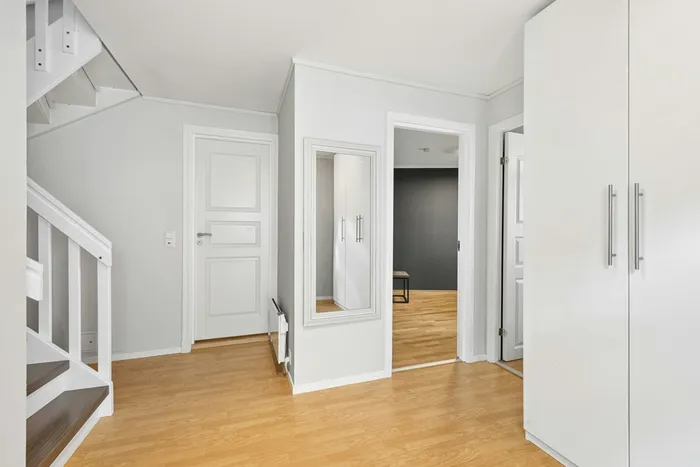
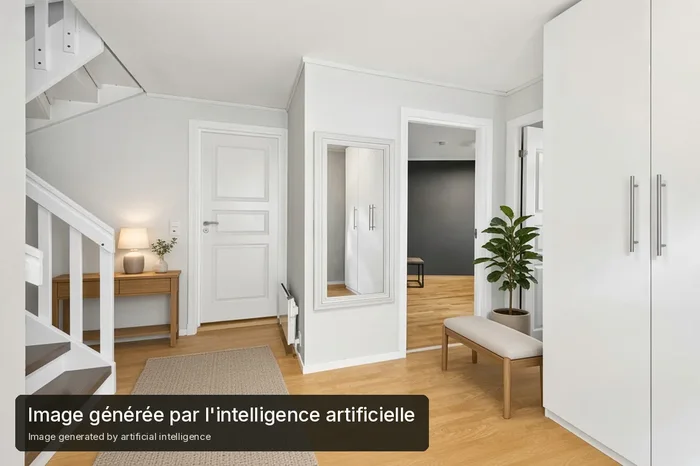
Where to put the statement isn't specified; the guideline asks for it to be "clear and visible" in the advertisement. Our view: put it on the image itself, as above, as well as in the listing text. A photo gets downloaded, shared and reposted without the text around it, and the statement should travel with it.
Keep the originals, and be ready to show them
Section 6.3.1 also asks brokers to "keep on record any relevant information that explains or justifies the use of AI (e.g., original versions of photos, human intervention and validation, context of use) so that the public can be informed and the original photos can be made available upon request". In practice, that means a folder per listing with:
- the unedited files from the photographer;
- the edited files that went online;
- a short note of what was changed, by whom, and who approved it before publication.
The OACIQ is also clear on who carries the risk: "Real estate brokers remain responsible for the accuracy and truthfulness of advertisements, even when the ads are produced by AI or any other technological tool." That includes edits made by an outside editor such as us. Section 5 of the regulation already requires a licence holder to verify information given to the public and "be able at all times to prove the accuracy of the information"; the originals are how you do that for a photo.
The guideline also notes that "Any use of AI involving the processing of personal information must comply with applicable privacy and consent laws." Our view: before photos go to any AI tool or outside editor, take family photos, mail, documents and screens with personal details out of the shot, or ask for them to be blurred.
Old photos and copyright
A seller who listed before often has a folder of photos from last time. The OACIQ's marketing photos page is blunt about reusing them: can a broker safely use old photos from the seller, another broker or a developer? "The answer is no", not until the broker has checked who holds the rights and what the terms of use are. The page says:
- if the seller isn't the author, the broker must get from the seller a signed copy of the contract or licence with the photographer;
- this applies "even if the photos were taken for the same seller during a previous marketing of the property";
- the broker must document the file with the contract, invoices or written exchanges;
- "If there is no clear confirmation that the photographs can be reused, the real estate broker will have to organize a new photo session."
The guideline adds that the terms of use cover both publishing and modifying the images, so an edit, AI or not, needs the licence to allow it too. It also notes that the brokers' professional liability insurance (FARCIQ) excludes copyright infringement claims. Under section 38.1 of the Copyright Act, statutory damages for infringement for commercial purposes run from $500 to $20,000 per work, which the OACIQ notes means per photograph.
Our view: when you book a photographer, ask for a licence in writing that allows editing (including AI-assisted editing) and reuse for the same property, so the question doesn't come up next time.
What has to be on the ad, and on your social graphics
A listing photo with your name and logo on it, posted to Instagram or Facebook, is advertising. The guideline says the mandatory statements apply "regardless of the medium used (business cards, signs, brochures, radio, television, emails, Internet, social networks, promotional articles, etc.)", except periodicals, which have their own rules (OACIQ, mandatory statements).
- Who you are (section 114). The broker's name as it appears on the licence; the licence held (real estate broker, residential real estate broker or commercial real estate broker, under section 115); and, if the broker works for an agency, the agency's name followed by its licence. An agency's own ads must show the name on its licence and the licence held (section 116).
- On the description sheet (section 118). The broker's or agency's name and licence must be "displayed prominently in type of the same colour at least the size of the other information appearing in the document or property description", whatever the medium.
- Your photo (section 113(5)). Ads may not contain a photograph of the licence holder "taken more than 5 years earlier". Check the headshot in your templates and watermark.
- Numbers (section 113(4)). No "statistic for which no source is given", so a "most homes sold in the area" banner needs a source or has to go.
- Timing (guideline 6.1 and section 111). A brokerage contract must be signed before you advertise a property, and the guideline says that before the contract is signed and the listing is entered on the listing service, posts such as "Coming soon!" are prohibited. Section 111 requires the express written authorization of the client the broker acts for before advertising.
- Someone else's listing (guideline 6.2.4). If you share a listing that isn't yours, identify the seller's broker clearly, and get the listing broker's permission before promoting it.
"Sold" banners and overlays
The "sold" graphic is where Quebec's rules are most specific. Section 7 of the guideline (OACIQ, advertising of completed transactions) says:
- When to say "sold". The broker must mark the property "sold" on the sign, social media, description sheets and other media once all conditions of the accepted promise to purchase are fulfilled.
- No price. A broker may not advertise the amount the property sold for, the price the seller originally asked under the brokerage contract, or "a percentage that could be used to deduce the sale price". For an accepted promise to purchase, the accepted price and any percentage revealing it are also out. So "Sold at 104% of asking" is not an option.
- "Sold in X days". Count from the signing of the brokerage contract to the fulfilment of all conditions, not from the acceptance of the promise to purchase.
- Sold in collaboration. A collaborating broker may advertise the sale with the listing broker's express authorization, using "Sold in collaboration" or "Bought through" with the broker's or agency's name.
- Take it down. Signs and ads come down at the signing of the deed of sale or the expiry of the brokerage contract, whichever comes first (guideline s.7.1; the same applies to "sold in collaboration" signs under s.7.4), unless the guideline's rules for advertising after the deed apply, which need the buyer's written authorization.
For the yard sign itself, the guideline asks brokers to check municipal by-laws, Quebec's law on roadside advertising and, for a condo, the co-ownership rules before placing one (guideline 6.2.5).
French on photo overlays and graphics
Section 58 of the Charter says: "Public signs and posters and commercial advertising must be in French. They may also be both in French and in another language provided that French is markedly predominant." Section 52 says brochures, catalogues, folders and similar documents available to the public must be in French "regardless of the medium used", and may be offered in another language only if the French version is available on terms at least as favourable.
The OQLF's page on the language of commerce and business (in French) says customers have the right to a complete French version of a business's website and to French content on its social media. Its page on signs, business names and trademarks (in French, updated 29 September 2026) explains "markedly predominant": the French text must have a much greater visual impact, which means taking up at least twice the space of the text in the other language, with at least equal visibility and legibility. Phone numbers, addresses, figures and percentages don't count toward it.
You may still see a 1993 regulation cited for the "twice as large" test. That regulation (C-11, r. 11) was repealed on 1 June 2025, so rely on the OQLF's current page rather than old summaries.
What that means for text burned into listing photos is our reading, not an OQLF ruling: the AI statement, "Sold" (« Vendu »), "Open house" (« Visite libre ») and any slogan on the image should be in French, and if you add English, the French should be at least twice the size. Your registered business name and trademark have their own rules under section 58.1 and the OQLF page above. If a campaign depends on it, ask the OQLF or a lawyer.
Edits that fit Quebec's rules (our view)
- Fine, with the AI statement if AI was used: exposure, white balance, straight verticals, window pull, removing loose clutter, a blue sky on a grey day.
- Fine with the statement, and the original kept on file: virtual staging of an empty room, virtual twilight, a seasonal change such as a green lawn on a winter exterior (if you use one, our view is to say which season the photo shows, too).
- Don't, label or not: removing cracks, stains, water damage or a neighbouring building; changing windows, walls, flooring or the view; stretching a room; adding a feature the property doesn't have. In our reading, these are the kind of edits the OACIQ means when it says images that "fundamentally alter the actual appearance of a property" break the rules, and when it tells brokers to "never use AI to hide defects, alter the structure, or misrepresent a property".
For the wider picture on labelling, see our guide to disclosing AI-edited listing photos and is virtual staging legal and worth it.
A brief you can send your photographer or editor
- Property: address, and whether it's a condo (co-ownership) or freehold.
- Licence: written permission to edit the photos (including with AI) and to reuse them for this property.
- Edits allowed: exposure, white balance, verticals, window pull, loose-clutter removal. Staging, twilight or season changes only where asked.
- Not allowed: hiding defects, changing structure, finishes or views, adding features.
- Labelling: on every AI-edited file, burn in « Image générée par l'intelligence artificielle »; if an English line is added, make the French take up at least twice the space.
- Deliver the unedited originals with the edited set, with the same file names, so the file shows which is which.
- Overlays: French text; no sale price or percentage on "sold" graphics; broker headshot no older than 5 years.
More on briefing: how to brief a photo editor on MLS photo rules. Booking aerials of the property? See our guide to drone listing photos and Transport Canada rules.
What it costs to have us edit the set
From our pricing and listing photos pages: first listing US$29, then US$32 per listing, or US$229 a month for regular listings (prices exclude local taxes). Edits come back within 24 hours, and you pay after delivery. If you'd like to judge the style first, send us one photo for a free sample edit at hello@lightandpolish.com or through our contact page. More on how we work with Canadian realtors is on our Canada page.
Frequently asked questions
Do I have to label every edited listing photo in Quebec?
The OACIQ's advertising guideline says that when an image generated by artificial intelligence is used in an advertisement, the ad must include a clear and visible statement such as "Image generated by artificial intelligence". Its examples include adding furniture, virtual staging, creating a seasonal atmosphere and adjusting the lighting with AI. The guideline does not address edits made without AI, such as a manual exposure correction. Our view: if AI touched the image, label it; if you are unsure whether an edit counts, label it or ask the OACIQ.
What should the AI statement say, and in which language?
The OACIQ gives "Image generated by artificial intelligence" as an example in English and "Image générée par l'intelligence artificielle" in its French guideline, and calls it a minimum requirement. The Charter of the French language says commercial advertising must be in French, and may also be in another language if French is markedly predominant. Our view is to write the statement in French, and if you add English, make the French take up at least twice the space of the English.
Can I reuse photos from the last time the property was listed?
Only if the licence allows it. The OACIQ says a broker who receives old photos from a seller, another broker or a developer must check who holds the copyright and the terms of use, and get a signed copy of the contract or licence with the photographer if the seller isn't the author. This applies even if the photos were taken for the same seller. If there is no clear confirmation that the photos can be reused, the OACIQ says a new photo session is needed.
Can a "Sold" graphic show the price or "sold in 5 days"?
Not the price. The OACIQ guideline says a broker may not advertise the price the property sold for, the price originally asked under the brokerage contract, or a percentage from which the sale price could be worked out. "Sold in X days" is allowed, counted from the signing of the brokerage contract to the fulfilment of all conditions, not from the acceptance of the promise to purchase.
Our services: Real estate photo editing (first listing US$29) · Real estate photo editing canada · Free listing photo checklist (PDF)
Related
- Real estate listing photo editing
- How to shoot MLS and REALTOR.ca listing photos in Canada
- Drone listing photos in Canada: Transport Canada rules for realtors (2026)
- How much does drone photo editing cost for real estate? (2026 prices)
- How much does 360° virtual tour editing cost? (2026 prices)
- Dubai holiday home listing photos: DET permit and platform rules (2026)
- How much does real estate video editing cost? (2026 prices)
This article is general information, not legal advice. Rules change; check the linked official sources.